
How I score wine
Wine criticism often begins and ends with a number. That number is frequently misunderstood, sometimes mistrusted, and often resented. I understand why. Publicly rating someone else’s work is an awkward thing to do, and at times it feels a little indecent. Yet I continue to use the 100-point system, not because it is perfect, but because it remains the least flawed tool available for communicating technical quality at scale.
My tasting is contextual. Wines are not tasted blind. Each evaluation is carried out with full awareness of grape variety, region, producer and vintage. I don't see this as a concession to bias, but a rejection of false objectivity. Wine is not an abstract liquid. It is the product of intention, tradition, place and choice. Removing that context does not automatically make an assessment more honest; it can risk making it less accurate. A wine should be judged on whether it succeeds on its own terms, not on how closely it conforms to a generic ideal.
The 100-point scale is used here as a technical instrument. It measures balance, structure, precision, texture, clarity of aroma, length and overall harmony. Expression of variety and articulation of origin matter. So does coherence. Where relevant, the ability of a wine to develop with age is considered. The score reflects execution alone. It does not attempt to incorporate sustainability, ethics, value, packaging or cultural relevance. Those questions are important, but they belong elsewhere. When too many ideas are folded into a single number, that number loses meaning.
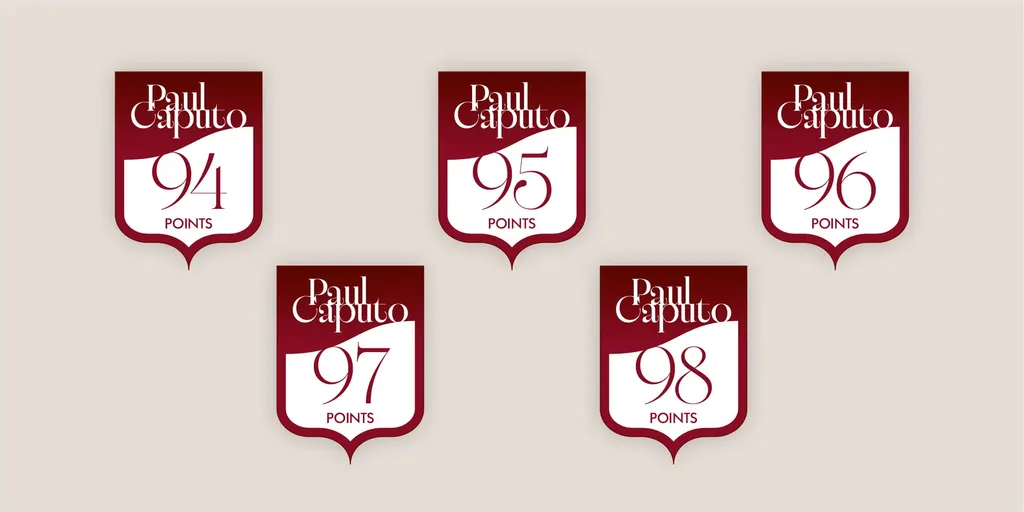
In my interpretation of the scale, anything over 90 points represents a fantastic wine. By the time we reach 96 points, we are no longer talking about quality in broad terms, but about some of the best wines in the world, where distinctions become increasingly fine and subtle. In truth, I do not often go beyond this range. That is not reluctance, but realism. At the top end of the scale, differences are marginal, contextual and often fleeting.
I am aware of the criticism that this effectively turns the 100-point system into a compressed band where most serious wines cluster closely together. To an extent, that criticism is valid. The overall quality of wine has risen dramatically over the past two decades. Advances in viticulture, better understanding of site, cleaner cellar practices and global exchange of knowledge have led to a degree of homogenisation at the level of competence. The implication is unavoidable: whatever system you use, stars, points, the 20-point scale you find in the UK, you will end up grouping many wines close together. I have yet to encounter a system that does not, by implication, do exactly that. It is an uncomfortable truth, but not one that can be solved by changing the scale.
There is also a deeper discomfort with the act of scoring itself. I remember sitting at dinner with my friend Chris Barnes, who was visiting from New York while filming in Piedmont for his Grape Collective shops. We were talking with producers, as wine people inevitably do, and the subject of points arose. Chris was adamant that publicly rating someone else’s work is not cool. Deep down, I sometimes agree. Wine is an expression of labour, belief and often risk. Reducing it to a number can feel crude. Yet in practice, scores have become a necessary evil. They are a shared shorthand in a crowded, noisy market, and pretending otherwise does not make them go away.
I love wine. I am frequently seduced by almost every style. I believe that in most cases there is a great example of nearly every category. At the same time, I am not averse to calling nonsense when I encounter it. Some wines are competently made but fundamentally cynical. A Primitivo fermented to nine grams of residual sugar for the bottom shelves of German supermarkets may have its audience, but I am not part of it. The fact that someone might enjoy such a wine does not obligate me to pretend it is good. Technical assessment requires judgement, and judgement requires the courage to say no.
This inevitably leads to the question of perfection. Can any wine achieve 100 points? By definition, that would be a perfect score. Whether a perfect score corresponds to a perfect wine is another matter entirely. A wine can be technically flawless in a given moment and still not be emotionally complete, culturally resonant or enduring. Perfection in wine is transient. The score captures a moment of assessment, not an eternal truth.
Scores also exist within a broken media landscape. If you look back at wine magazines and reviews from a decade ago, average scores were lower. Inflation has crept in, driven in part by economics. The higher the score, the more likely it is to be promoted. The more it is promoted, the more visible the critic becomes. I am not naïve about this dynamic. My only response is that longevity in this profession depends on credibility. In the long run, being taken seriously matters more than being widely shared.
This brings us to ethics. Can my scores be trusted? Can anyone’s? Wine tasting is subjective by nature, and every score is a snapshot of judgement at a particular moment. No taster is infallible. What I can offer is experience. Over two decades of tasting as a buyer, a competition judge and a critic, I have learned to recognise the difference between the good, the bad and the ugly. I have spent years travelling, talking with winemakers and agronomists, debating with sommeliers and colleagues, and understanding how wines are made and why they taste the way they do. That experience does not make my judgement infallible, but it does make it informed.
To some readers, lunches and dinners with producers may look like perks. I see them as hard work. My time is valuable, and those meetings, while informative, can also be physically and mentally tiring. In an intense and tightly packed schedule, they are opportunities to understand a multitude of topics more deeply, to discuss wider industry issues, and to place wines in context. I do not believe that a bowl of pasta compromises my integrity. Ethical independence is not about isolation; it is about clarity of purpose and consistency of judgement.
The 100-point system, used carefully and honestly, remains a useful tool. It does not define what matters in wine, but it does allow me to provide additional opinion through a snapshot of a moment in time. Some people find that useful.