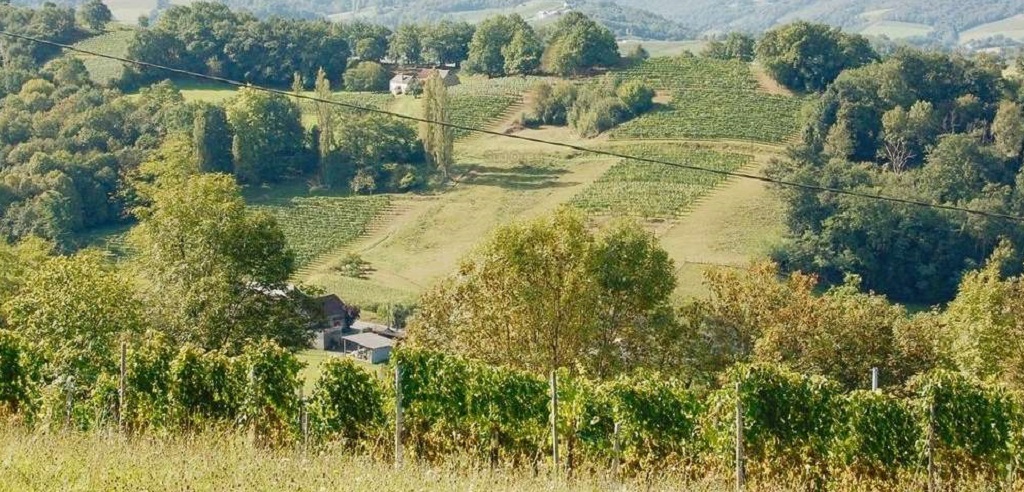
Béarn is an appellation for red, white and rosé wines in South-West France. Unusual in that its geographic confines are not contiguous, Béarn AOC produces richly coloured, full-bodied reds, lively, aromatic rosés and fresh, delicate white wines. Part of the appellation overlaps the more widely known Jurançon AOC.
About
Béarn’s vineyards occupy free-draining slopes at the foot of the Pyrenees. The soils are fairly consistent across the appellation with sandy clay dominating, and the climate - though largely influenced by the Atlantic Ocean - benefits from a fortuitous absence of rainfall during late summer, and the drying effects of the warm Foehn wind (also written as Föhn). Grapes are hence granted an extended hang-time enabling them to reach optimal ripeness. The winemakers here are mostly small independent operations with a couple of cooperatives as well. Many have spent a lifetime fine-tuning their practice to get the best results from Béarn’s unique terroir. In order for a red wine to be labelled Béarn, it must comprise at least 50% from the Tannat variety, with the remainder coming from the other permitted red grapes, listed in order of prevalence - Cabernet Sauvignon, Cabernet Franc, Fer Servadou and Courbu Noir. White wines are produced on a much smaller scale from the Raffait (rarely seen outside of Béarn), Petit Manseng, Gros Manseng, Courbu Blanc and Sauvignon Blanc grapes.