Sub-region
Sometimes referred to by its historical name, Bianco di Custoza, this small Venetian appellation produces white wines from Garganega, Trebbianello, and Trebbiano Toscano.
4
8
Winemaking in the Custoza area dates back to Roman times, though the modern history of the appellation begins in the 20th century. In the decades following World War II, local growers began to organize cooperative cellars to commercialize the area's white blends. The DOC designation arrived in 1971, making Custoza one of the earliest white wine DOCs in Italy, ahead of its now better-known neighbours.
The name “Custoza” itself is associated with two 19th-century battles for Italian unification, lending the area cultural as well as agricultural significance. In the 1980s and 90s, Custoza’s reputation suffered from industrial overproduction and a lack of clear identity. However, in recent years, improvements in vineyard management, winemaking, and marketing have helped the region regain confidence. A renewed focus on indigenous varieties and terroir expression is now reshaping its profile.
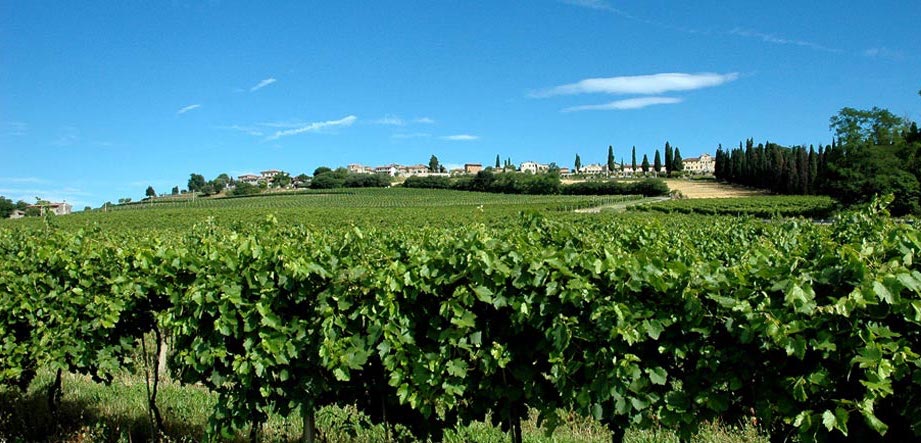
The vineyards of Custoza lie on the moraine hills south of Lake Garda, formed by ancient glaciers. This terrain is a patchwork of gravelly, sandy, and calcareous soils, contributing minerality and freshness to the wines. The proximity of the lake moderates the climate, ensuring good ripening while preserving acidity. Warm days and cool nights help develop aromatic intensity.
Custoza's wines are relatively straight froward. The entry level Custoza, which makes up about 85% of the production is often a simple, easy drinking and relatively inexpensive wine. The Superiore versions typically have more body and concentration, along with longer lees ageing. There is also a Riserva category which leverages longer ageing.
Custoza must be a blend of three traditional white grape varieties: Garganega, Trebbiano Toscano, and Trebbianello (Friulano). Producers may also choose to use Bianca Fernanda (shown to be a clone of Cortese) and others such as Incrocio Manzoni, Riesling and Chardonnay.
The Custoza DOC allows for several wine types beyond the standard white blend. The core classification is Custoza Bianco DOC, a dry white wine made from a permitted blend of mostly Trebbiano Toscano, Garganega, and Bianca Fernanda, with supporting roles from Malvasia, Chardonnay, Riesling Italico, and others. These wines are typically unoaked, fresh, and designed for early consumption, though quality varies significantly across producers.
In addition to the standard Bianco, the DOC permits three other styles: Custoza Superiore DOC, Custoza Spumante DOC, and Custoza Passito DOC. Superiore must have higher minimum alcohol (12%) and undergo longer ageing (at least 5 months) before release, resulting in more structured, concentrated wines. Spumante wines can be made via Charmat or Metodo Classico and range from dry to demi-sec. Passito is a rare dessert wine made from dried grapes, showing honeyed, tropical, and nutty characteristics.
Custoza has long been a wine for local consumption and casual drinking, often poured in carafes in the osterie of Verona. But a new generation of producers is trying to lift its profile beyond this image. Improved vineyard selection, lower yields, and more precise blending are elevating quality, while the Superiore category, which requires longer ageing and higher alcohol, has become a testing ground for serious expressions.
There is also a movement toward organic viticulture (not easy here) and more expressive single-vineyard wines. Winemakers are exploring native yeasts, longer lees contact, and even amphora fermentation to add complexity. Despite its commercial orientation, Custoza is gradually building a niche among sommeliers and enthusiasts looking for authentic, terroir-driven Italian whites at a fair price. The challenge remains differentiation in a crowded market, but the trajectory is upward.
Roberta Bricola is the current president of the consorzio and is responsible for driving the appellation forward. She runs Cantina Gorgo. One of the leading estates in terms of both size and the quality of the wines is Monte del Fra, where the Bonomo family release a Superiore version called Ca del Magro.