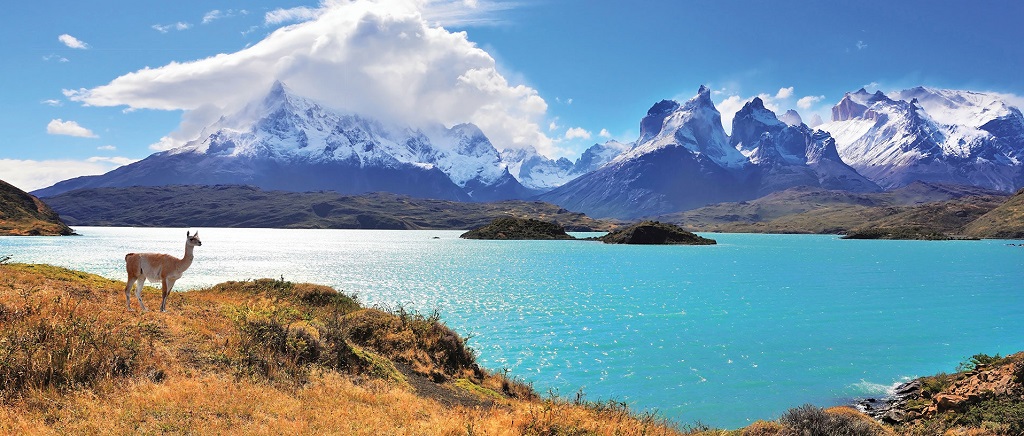
The country of Chile occupies a thin strip of land that clings to the edge of the South American continent. Established as one of the Southern Hemisphere’s most important wine producing nations, it is best known for its red wines made from the traditional Bordeaux varieties.
Bordering Peru to the north and Argentina to the east, with a Pacific Ocean coastline that extends over thousands of miles, Chile is a long, narrow country which covers an impressive area of more than seven-hundred-and-fifty square kilometres. Like much of Latin America, its history is checkered and diverse, with indigenous tribes, the Incan empire, Spanish colonial rule and eventual independence, all playing a significant part in the country’s development, as well as forcing various changes to the national boundaries of the territory. Today, it is considered one of the continent’s most prosperous nations, with its wine industry an important part of a heathy export market. As of 2018, Chile is the fifth largest exporter of wine in the world and ranks seventh globally for production. Viticultural activity in Chile dates back to the sixteenth century Spanish settlers who brought the first European winemaking grapes to the continent. Mission - or Pais as it is known here - was planted across a large area of the country's vineyards, producing what is generally thought to be lower quality wine for the domestic market. However, it is not that uncommon, particularly in recent years, to find quality-focused Chilean winemakers experimenting with this variety in their blends, and its popularity from a natural wine perspective continues to increase. The impact of the French grapes from the nineteenth century onwards, started a slow transformation from an industry led by domestic demand to one in which quality produce for export was the priority. Today, red grapes account for approximately 70% of the country's area under vine with Cabernet Sauvignon, Merlot, Syrah, Pinot Noir and Carménère all prevalent in Chile’s vineyards, whilst Chardonnay - the leading white variety - is supported by smaller amounts of Sauvignon Blanc, Viognier and Riesling which thrives in the country's cooler climate regions. Just as neighbouring Argentina has adopted the Malbec grape, Chile has taken Carménère as its national variety (although it should be noted that whilst the Chilean grape is genetically identical to the Bordeaux variety, it is most often spelt here with only one accent - Carmenère). Thought to be heading for extinction in France, Chile has revived the fortunes of this ancient variety such that is a major constituent in many Bordeaux style blends here and is also increasingly vinified as a mono-varietal wine. From around the middle of the twentieth century, Chile has gradually grown its reputation as a serious wine nation. In some ways, one is amazed it has taken so long! For this geographical misshape - more than four-thousand kilometres long and, averaging only a touch over one-hundred-and-seventy in width - offers the perfect set of conditions to the winemaker. Diverse in topography and climate, with vineyards occupying sites a stone’s throw from the Pacific and in the foothills of the Andes, this country of extremes delivers exciting wines at every price point.