Appellation
The Dundee Hills AVA is the heartland of Oregon Pinot Noir. With iron-rich volcanic soils, a mild climate, and an early role in the state’s wine history, it produces elegant, age-worthy reds. Pioneering estates and a focus on terroir-driven winemaking have secured its status as a benchmark for New World Pinot Noir.
7
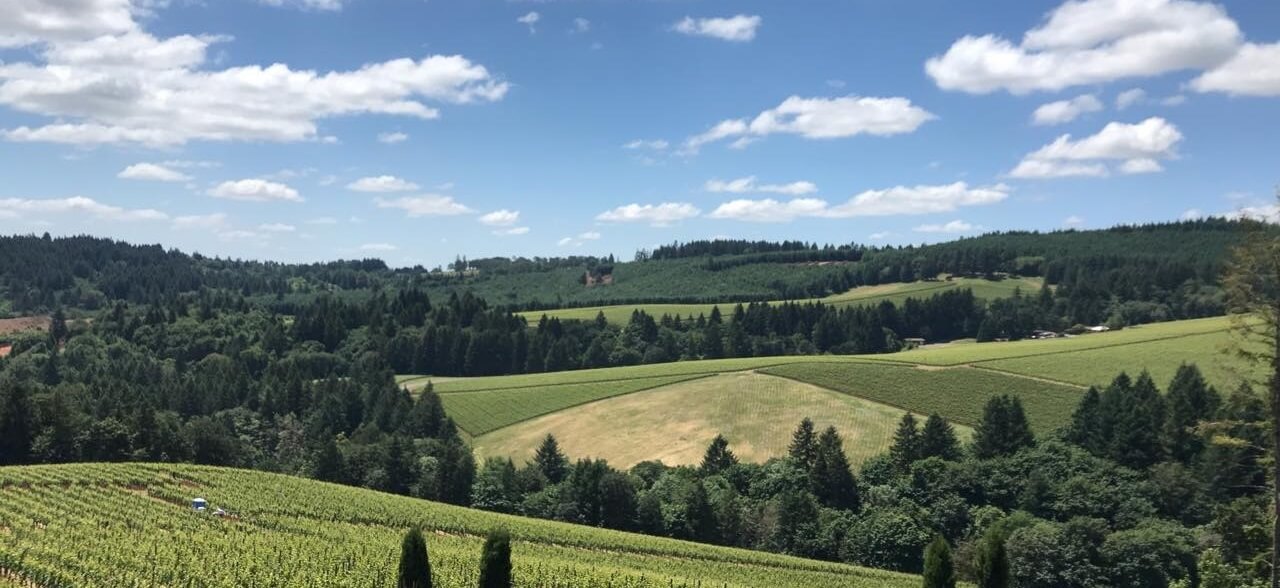
The Dundee Hills AVA, located within Oregon’s larger Willamette Valley, is one of the state’s most prestigious and recognizable wine regions. Established in 2005, it is often considered the cradle of Oregon’s modern wine industry, with many of the state’s pioneering producers setting roots here in the 1960s and 70s. Its gently rolling hills and moderate elevations offer a distinct identity within the valley.
Although the region is most celebrated for its Pinot Noir, it also yields expressive Chardonnay and Pinot Gris. The AVA’s compact size, consistent climate, and cohesive geology allow for a clear expression of site, which has drawn comparisons to the Côte d’Or in Burgundy. Today, the Dundee Hills is a focal point for quality-driven, terroir-focused winemaking in Oregon.
Modern viticulture in Dundee Hills began in the 1960s, when David Lett of The Eyrie Vineyards planted Pinot Noir cuttings brought from UC Davis. His groundbreaking wines, particularly his 1975 South Block Reserve, gained international attention and inspired a generation of winemakers to follow. Eyrie Vineyards earned the first piece of notable international recognition in 1979 when it placed third in a wine Olympiads hosted by the French review Gault-Millau. By the 1980s, other influential names like Domaine Drouhin and Archery Summit had established vineyards here.
The AVA was officially recognized in 2005, reflecting a unified sense of place and shared climate and soil conditions distinct from the surrounding Willamette Valley. Today, the region retains a pioneering spirit while embracing modern techniques and sustainability practices. Many of Oregon’s most iconic and age-worthy wines still come from Dundee Hills’ original vineyards.
he defining feature of Dundee Hills terroir is its volcanic origin. The soils are primarily Jory, a well-drained, iron-rich loam formed from basaltic lava flows. These red soils retain heat and promote deep root growth while offering moderate fertility that naturally limits vine vigour. This contributes to small, concentrated berries and long growing seasons.
The AVA’s mid-slope vineyards benefit from ideal sun exposure and good air drainage, reducing the risk of frost. Temperatures are relatively moderate, with warm days and cool nights that preserve acidity. Rainfall is lower here than in surrounding subregions, particularly during harvest. Together, these factors produce wines with purity, balance, and a strong sense of place.
Pinot Noir dominates the Dundee Hills, accounting for over 70% of vineyard plantings. Wines here tend to be perfumed, red-fruited, and silky in texture, often showing notes of cherry, rose petal, and baking spice. While elegant in youth, many examples reward ageing, developing complexity and finesse over time.
Chardonnay is the second most important variety, showing great promise in recent years. Newer clones and improved farming have led to more structured, mineral-driven wines, often fermented and aged in neutral oak. Pinot Gris and smaller plantings of Grüner Veltliner and Gamay add further dimension to the AVA’s portfolio but remain limited in volume.
There is a continued push toward organic and biodynamic viticulture in Dundee Hills, with many producers emphasizing regenerative farming and soil health. Low-intervention winemaking is increasingly common, with native yeasts, whole-cluster fermentation, and minimal new oak usage shaping a more transparent expression of terroir.
At the same time, a new generation of winemakers is redefining Oregon wine through small-lot production, clonal experimentation, and innovation with lesser-known grapes. Dundee Hills remains at the forefront of Oregon’s reputation-building, blending traditional practices with modern sensibilities to attract a global audience of wine lovers and professionals.