Region
Friuli-Venezia Giulia is one of Italy's most exciting wine regions. High quality wines are made from a large range of local and international varieties.
4
46
Tucked into Italy’s northeastern corner, Friuli–Venezia Giulia borders Austria to the north, Slovenia to the east, and the Adriatic Sea to the south, forming a geographical and cultural crossroads unlike any other in Italy. With its mosaic of mountains, hills, plains, and coastlines, the region reflects a blend of Latin, Slavic, and Germanic influences. This diversity permeates the language, cuisine, and winemaking traditions of Friuli, where local dialects mix with German and Slovene, and where culinary staples range from frico (cheese crisp) and jota (bean and sauerkraut soup) to prosciutto di San Daniele and alpine cheeses. It is a region known for its reserved character, intellectual curiosity, and craftsmanship, and its wines reflect these same traits—marked by precision, freshness, and clarity.
Unlike the sprawling vineyards of southern Italy, Friuli’s winegrowing is concentrated in small, often family-run estates where low yields and attention to detail are prioritized over volume. The region is especially celebrated for its white wines, widely considered among the finest in Italy. It is also home to some of the country’s most progressive winemakers, particularly those who pioneered skin-contact whites, amphora fermentations, and natural winemaking techniques. In recent decades, Friuli–Venezia Giulia has developed a reputation as a laboratory of innovation and revival, where native grapes are rediscovered, international varieties are reinterpreted, and terroir is studied with quiet intensity.
The roots of viticulture in Friuli stretch back to the pre-Roman era, when Celtic and Illyrian tribes cultivated vines along the alpine foothills. The Romans formalized wine production, establishing Aquileia as an important outpost for trade and viticulture. During the Middle Ages and Renaissance, monasteries and local nobility maintained vineyards, often alongside mixed agriculture. The region’s location on the border of empires meant that it experienced frequent changes in political control, especially under the Austro-Hungarian Empire, which brought technical innovation and a taste for aromatic and structured white wines.
The 20th century saw tremendous transformation. After the devastation of two world wars, Friuli emerged in the 1960s and ’70s as a pioneer in modern white winemaking, led by figures such as Mario Schiopetto, Silvio Jermann, and Livio Felluga. These winemakers introduced temperature-controlled fermentation, stainless steel tanks, and careful grape selection, raising the bar for quality across Italy. At the same time, interest in autochthonous varieties like Friulano, Ribolla Gialla, and Refosco dal Peduncolo Rosso began to grow, setting the stage for a renewed regional identity. Since the 1990s, a new wave of producers—especially in Collio and Colli Orientali del Friuli—has explored skin-contact whites and natural winemaking, placing Friuli at the forefront of a global conversation about wine, tradition, and authenticity.
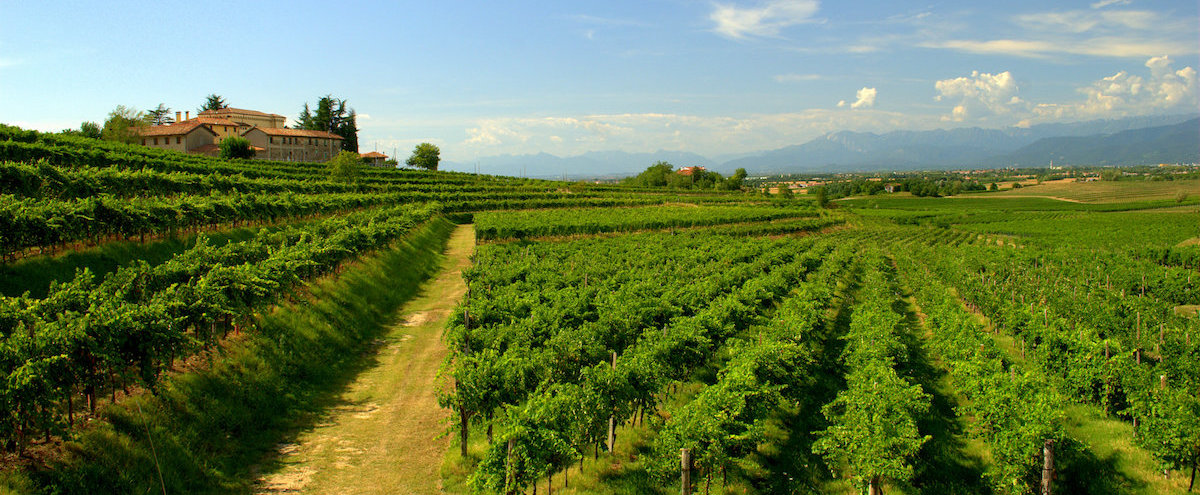
Friuli’s terroir is shaped by a convergence of alpine, continental, and maritime influences, along with complex soils and varied topography. In the east, the Collio and Colli Orientali zones lie on undulating hills between 100 and 400 meters in elevation, often facing southeast. The dominant soil type here is ponca (also called flysch), a brittle, stratified mix of marl and sandstone that offers excellent drainage, mineral complexity, and vine stress, ideal for long-lived whites and structured reds. The proximity to the Julian Alps provides cool air currents at night, while warm breezes from the Adriatic Sea help grapes ripen evenly.
In Friuli Grave, the terrain flattens out, and the soils become stony and gravel-rich, especially along the Tagliamento River. This terroir is suited to higher yields and earlier-ripening varieties, producing lighter, fruit-forward wines. In Isonzo, closer to the sea, the influence of marine breezes, silt, and sand creates a slightly warmer microclimate, ideal for expressive whites. Meanwhile, the Carso plateau is one of Italy’s most distinctive terroirs: a windswept limestone shelf with thin, red iron-rich soils and an almost lunar landscape. Here, producers battle extreme conditions to grow Vitovskaand Terrano, yielding wines that are angular, saline, and fiercely individual. Across the region, altitude, wind, soil variation, and sunlight exposure combine to create a patchwork of microclimates—a key reason for Friuli’s stylistic breadth and consistency in quality.
Friuli–Venezia Giulia is renowned for its white grapes, both international and native, grown and vinified with a level of care and precision rarely matched elsewhere. Friulano (formerly known as Tocai Friulano) is the region’s flagship native variety—producing dry, medium-bodied wines with almond, pear, and herbal notes, often with a subtle waxy texture and bitter finish. Ribolla Gialla, another ancient grape, is especially prized in the Collio and Brda areas for its high acidity and transparent expression of terroir, whether vinified in stainless steel or as a skin-contact “orange” wine. Malvasia Istriana, Verduzzo Friulano, and Vitovska round out the local white palette.
Among international whites, Pinot Grigio is the most commercially successful, though in Friuli it often shows more texture and nuance than in other Italian regions. Sauvignon Blanc, Chardonnay, and Pinot Bianco are also widely planted, often yielding wines with great aromatic lift and aging potential. On the red side, Refosco dal Peduncolo Rossois the most noble local grape—dark, spicy, and tannic, with wild berry and earthy undertones. Schioppettino, once nearly extinct, has been revived and now produces vibrant, peppery reds with real finesse. Other important reds include Pignolo(structured and age-worthy), Merlot, and Cabernet Franc, both of which perform exceptionally well in the region’s cooler, well-drained soils.
Friuli–Venezia Giulia is home to one DOCG, fourteen DOCs, and a number of unofficial but revered subzones. The most prestigious appellations are Collio DOC and Colli Orientali del Friuli DOC, located along the Slovenian border in the region’s eastern hills. These zones are known for their flysch soils—a layered mix of marl and sandstone—and produce white wines of exceptional structure, complexity, and minerality. Collio specializes in both single-varietal wines and blends (often labeled as Collio Bianco), featuring grapes such as Friulano, Sauvignon Blanc, Pinot Grigio, Chardonnay, and Ribolla Gialla. Colli Orientali, slightly more inland and cooler, excels in both whites and reds, especially Refosco dal Peduncolo Rosso and Schioppettino.
The region’s sole DOCG, Ramandolo DOCG, is a tiny zone in the northeast devoted to sweet wines made from Verduzzo Friulano, often late-harvested and oak-aged, with notes of honey, dried apricot, and herbs. Rosazzo DOCG, nested within Colli Orientali, was elevated in 2011 and allows blends based on Friulano with Sauvignon, Pinot Bianco, and others. Friuli Grave DOC, located on the gravelly plains west of Udine and Pordenone, is larger and flatter, known for more commercial expressions of international varieties like Merlot, Pinot Grigio, and Cabernet Franc. Other DOCs include Isonzo del Friuli DOC, known for its clean, mineral-driven whites from alluvial soils, and Carso DOC, on the limestone plateau above Trieste, where strong bora winds and iron-rich soils yield unique expressions of Terrano and Vitovska. Many of the region’s most characterful wines are also released under the broad Friuli DOC or as IGT Venezia Giulia, allowing for stylistic experimentation.
In recent years, Friuli–Venezia Giulia has become a global touchstone for skin-contact and natural white wines, especially among small producers working in the Collio and Carso. Inspired by ancient methods and guided by a desire to highlight grape and soil over technique, these winemakers ferment whites with their skins, often in amphorae or old wood, producing textured, amber-colored wines that challenge conventional categories. Grapes like Ribolla Gialla, Vitovska, and Malvasia Istriana have been at the heart of this movement, led by iconic figures such as Josko Gravner, Radikon, and Edi Kante.
Simultaneously, there is a trend toward precision, purity, and terroir delineation among more traditional estates, who emphasize clean, stainless-steel vinification, careful site selection, and sustainable viticulture. The best wines in Friuli today reflect a dual commitment: to technical excellence and to cultural authenticity. Producers are increasingly highlighting single-vineyard bottlings, reviving heirloom varieties, and working with lower sulfur and organic methods. Export markets, particularly in the US and Northern Europe, have embraced Friuli’s distinctive styles, especially its textural whites and rare reds. In an age of global uniformity, Friuli’s intellectual, expressive, and highly personal wines stand out for their originality, balance, and sense of place.