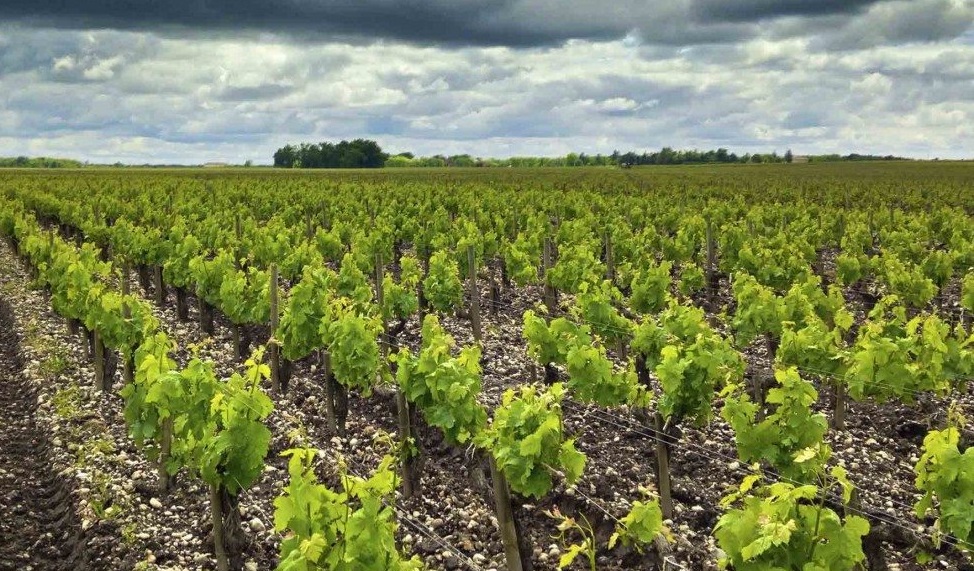
Somewhat confusingly given the literal translation of its name, Haut-Médoc refers to the southern part of the greater Médoc peninsula - a viticultural area of approximately four-thousand-six-hundred hectares on the left bank of the Gironde estuary. The appellation produces lively, powerful wines with complex aromas; several of its estates have been included in Cru Bourgeois classifications.
Haut-Médoc AOC can be applied to red wines produced in this area which do not fall under one of the more prestigious enclaved AOCs such as Pauillac or Margaux, whilst white wines produced in the same geographic confines use the generic Bordeaux Blanc label. The six grapes most synonymous with the Bordeaux wine region are the permitted varieties of the Haut-Médoc appellation, although Cabernet Franc and Carménère do not feature heavily in the AOCs vineyards. Just over half of the vine is comprised of the left bank favourite, Cabernet Sauvignon, with Merlot, Petit Verdot and to a lesser extent Malbec, in support. The climate here is typical of the region - warm summers, mild winters, minimal frost risk - and the soils of the appellation, whilst predictably diverse, generally fall into two distinct categories which favour cultivation of the two leading grapes. Close to the river, gravel terraces sit on clay subsoils, providing perfect conditions for Cabernet Sauvignon, whilst inland, a more dense clay composite allows the Merlot variety to flourish. Around one fifth of Haut-Médoc’s three-hundred or so growers are part of a cooperative, with the remaining majority operating independent cellars. Producing nearly thirty-million bottles per year, the high-quality wines of Haut-Médoc AOC offer an affordable alternative to the Bordeaux blends of the more famous appellations - brilliant in colour, full-bodied and balanced, these wines have the potential to improve with age for twenty years or more.