Sub-region
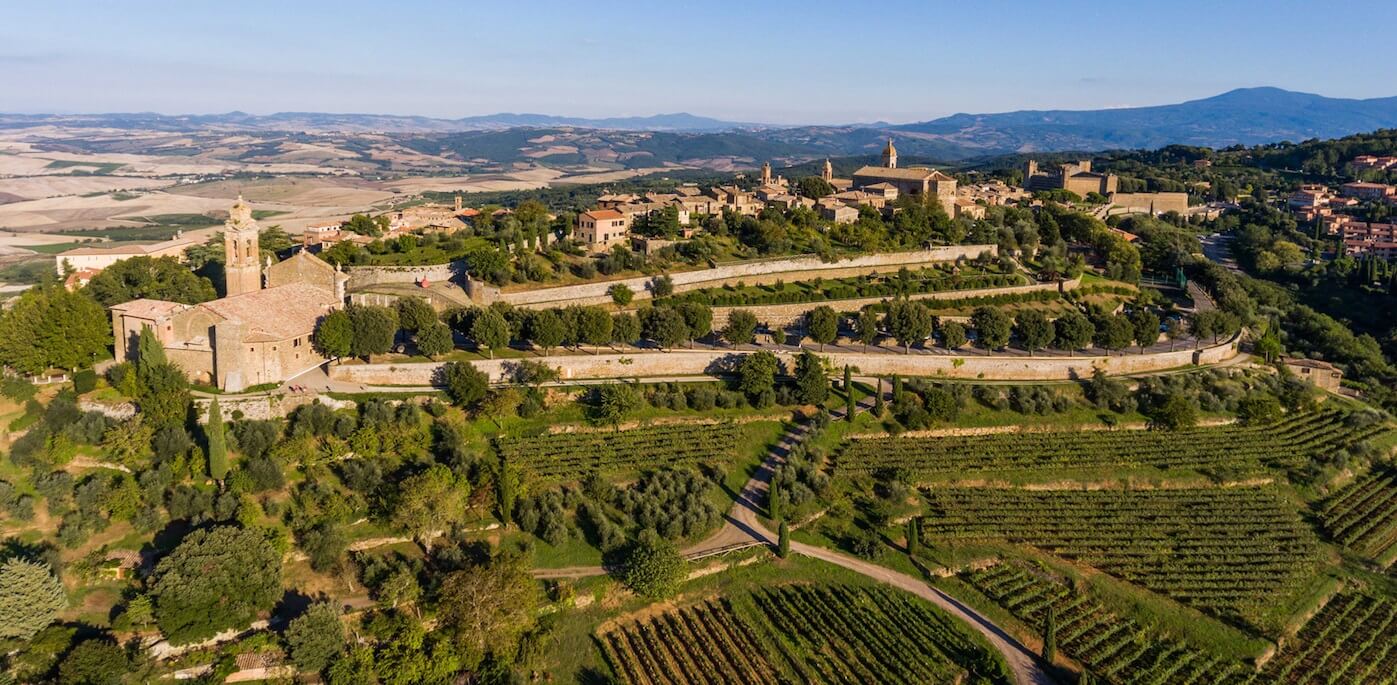
Brunello di Montalcino is one of the great red wines of Italy. Produced around the Tuscan town of Montalcino from a clone of Sangiovese, known locally as Brunello, it has come to represent one of the iconic monuments of the Italian wine scene. Capable of ageing and improving for many years, Brunello wines are typically full-bodied and structured with incredible depth, concentration and complexity. There are now dozens of boutique producers creating exceptional single vineyard wines.
9
57
Montalcino's wine history is a fascinating one. In just a few short decades it went from being a relatively unknown Tuscan wine to being one of the most notable and respected in the world.
Brunello di Montalcino is typically a full bodied red wine. Stylistically though there are many differences. The North side of the appellation is typically colder, and requires a longer ripening period. These wines (such as those from Capanna) are typically fresher and more austere. Likewise, producers such as Poggio Antico, own vineyards that surpass 500m. Wines from here are also fresher, with distinctive red fruit characteristics. South facing slopes tend to give richer, fatter wines with a riper fruit note. The choice of wood is important too, but these days most producers are seeking use non invasive wood. The use of new barrique, which inevitably gives a richer and sweeter style, is increasingly and thankfully limited.
Brunello is produced exclusively from Sangiovese. Although there are other grapes growing in the territory, they are not permitted to be used here. Red varieties such as Merlot, which does grow occasionally, are also not permitted Rosso di Montalcino.
Brunello di Montalcino is a DOCG wine. The appellation allows only for red wines produced exclusively from Sangiovese.
Climate change is testing the ability of winemakers to produce Brunello di Montalcno in the classic style. Rising temperatures are not only pushing up alcohol levels, they are also ensuring the wines are riper and denser. This scenario is causing debate around the the minimum aging periods currently in place. There are some in the appellation that believe the mandatory period of time is wood should be reduced to allow winemakers to adapt to difficult vintages.
As a thriving premium winemaking territory there are literally hundreds of people to follow here.
The current president of the Consorzio is Fabrizio Bindocci. Giacomo Bartolommei, Enrico Viglierchio and Riccardo Talenti are the current Vice Presidents.
%%card_56.subscriber%%