Region
Tuscany is one of Italy's most famous wine regions, home to the great triumvirate of Chianti Classico, Brunello di Montalcino and Vino Nobile di Montepulciano.
83 (showing 20)
325 (showing 200)
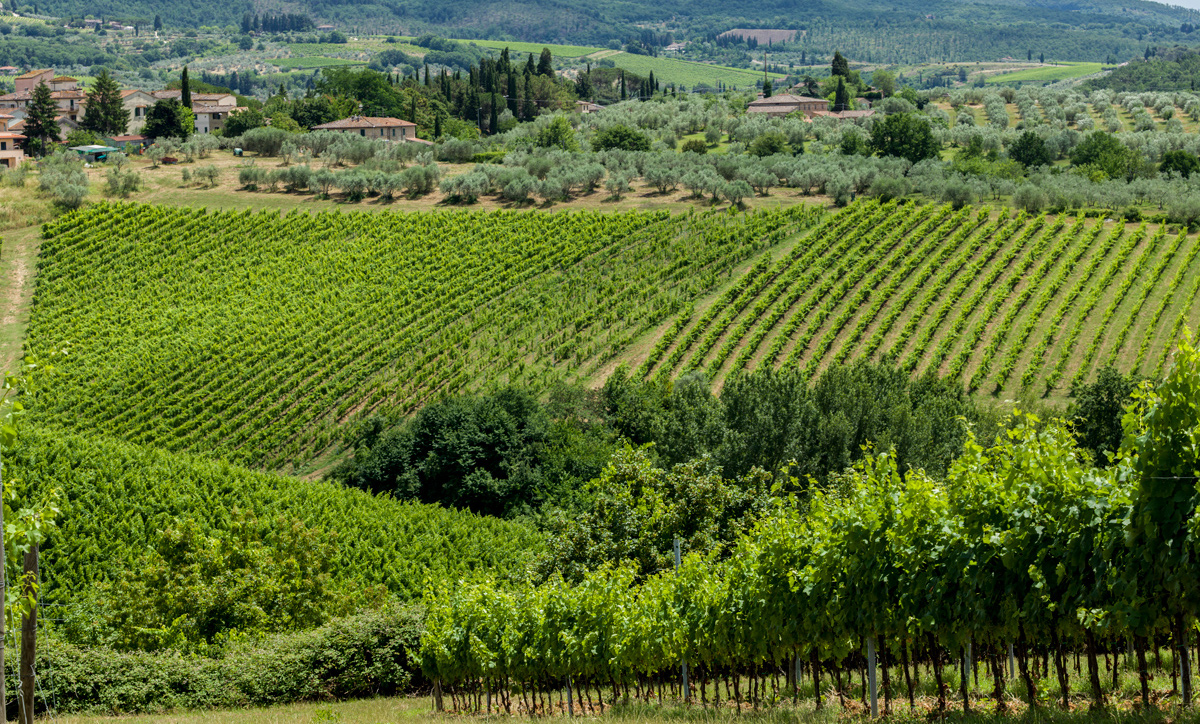
Tuscany—or Toscana in Italian—is perhaps Italy’s most iconic region, known as much for its timeless landscapes and Renaissance heritage as for its wines. Located in central Italy, bordered by the Tyrrhenian Sea to the west and the Apennines to the east, Tuscany is a place of gentle hills, cypress-lined roads, medieval villages, and sun-drenched vineyards. Its cultural capital, Florence, is a cradle of art and humanism, while smaller towns like Siena, Montalcino, Montepulciano, and San Gimignano are steeped in centuries of artistic and agricultural tradition.
Tuscany’s cuisine is rustic yet refined—wild game, hearty soups, beans, olive oil, and pecorino—rooted in the land and best paired with the region’s wines. With its blend of elevation, maritime influence, and diverse soils, Tuscany is ideally suited to viticulture, particularly for Sangiovese, the region’s defining grape. It is home to some of Italy’s most prestigious wines, including Chianti Classico, Brunello di Montalcino, and Super Tuscans, as well as innovative white wines and a growing movement toward sustainability. Tuscany’s wine identity is both deeply traditional and creatively modern, offering a rich interplay between history and reinvention.
In Montepulciano, another medieval town with a renaissance twist, Sangiovese is known as Prugnolo Gentile and gives gritty red wines with plenty of tannin and red berry fruit. Producer decisions in the cellar often influence the final style of wine, but while generally not as complex, or indeed age worthy as Brunello, it does offer a similar level of rusticity and Tuscan charm.
Tuscany's wine history dates back to the Etruscans, who may well have been producing wine in the 8th century BC. If not, they were certainly active in trade with the Greeks to the south and the Celts to the north and west. After the Roman conquest of Etruria, as it was known, in the third century BC, the proliferation of wine throughout the empire increased. Tuscan wine production is referenced in Roman agricultural texts and with moderate admiration.
Following the collapse of the western elements of the Roman Empire, the cultivation of vineyards at scale was interrupted. As the Dark Ages turned into the Middle Ages it was the Church, particularly the Benedictine monks that preserved the knowledge and traditions. Sloping, hillside vineyards on church lands encouraged the production of good wine, and its role in the Catholic sacrament ensured its continued presence in everyday life.
In the aftermath of the Second World War, agricultural norms changed across the country and Tuscany was no different. The gradual and then sudden collapse of the Mezzadria system forced vineyard landowners to become more commercial and create wine businesses at scale. During the 1960s and 1970s, historic family names such as Antinori and Frescobaldi invested in land outside of the classic regions, particularly close to the coast at Bolgheri. New winemaking projects utilised international Bordeaux grapes and spawned a movement known as the SuperTuscans. Premium wines, made in small volumes and sold at high prices while officially recognised as simple table wines changed the face of the wine business in the region and the whole country.
Tuscany’s terroir is as diverse as its appellations, defined by rolling hills, maritime breezes, sun exposure, and a patchwork of soils. Most vineyards lie between 200 and 500 meters, where diurnal temperature shifts preserve acidity and complexity. In Chianti Classico, soils range from galestro (friable schist) to alberese (limestone-clay), contributing to the Sangiovese’s hallmark tension and herbal character. The area’s mixed exposures and varying altitudes yield a wide stylistic range, now increasingly expressed through village-specific labeling.
Montalcino, farther south, is warmer and drier, with diverse soils from clay and marl in the north to stony, mineral-rich slopes in the south, producing Brunellos with varying weight and structure. In Montepulciano, clay-limestone soils dominate, favoring structured, aromatic Sangiovese. On the Tuscan coast, particularly in Bolgheri, the terroir is influenced by gravelly alluvial soils, warmth from the Tyrrhenian Sea, and maritime winds, creating ideal conditions for Bordeaux varieties.
Higher-elevation zones like Montecucco and parts of Chianti Rùfina benefit from cooler nights and later ripening, often producing more linear, aromatic wines. The islands of Elba and Giglio offer granite and sandy soils with strong saline breezes, giving freshness and brightness to both reds and whites. Overall, Tuscany’s terroir is defined by a balance of warmth and freshness, structure and aromatics, shaped by the interplay of soil, sun, slope, and elevation.
Sangiovese is Tuscany’s beating heart and occupies over two-thirds of its vineyard area. Known for its bright acidity, red cherry fruit, herbal notes, and firm tannins, it is a grape that mirrors place and producer philosophy. In Chianti Classico, it is lifted and aromatic; in Montalcino, darker and more powerful; in Montepulciano, deeper and more floral. It is often blended—historically with Canaiolo or Colorino, more recently with Cabernet Sauvignon or Merlot—but many producers now favor pure Sangiovese expressions.
For white wines, Vernaccia remains the region’s most important indigenous variety, producing wines with a balance of citrus, almond, and minerality. Trebbiano Toscano is widely planted but often neutral unless carefully managed. In coastal and IGT wines, Chardonnay, Viognier, Sauvignon Blanc, and Vermentino (especially in Maremma and the islands) are used to craft bright, aromatic whites with good texture and salinity.
The Super Tuscan phenomenon introduced Cabernet Sauvignon, Merlot, Syrah, and Petit Verdot into Tuscany’s viticultural fabric. These grapes—once controversial—now flourish in Bolgheri, Suvereto, and parts of Chianti, often blended with Sangiovese or bottled alone under Toscana IGT. Indigenous reds like Ciliegiolo, Mammolo, and Pugnitello are seeing a small but passionate revival, as producers reconnect with heritage and genetic diversity.
There are over 50 appellations in Tuscany. A handful of them are world famous and produce dozens, if not hundreds of premium wines. The region's historic wine is Chianti Classico, a separate appellation to the broader Chianti, which can include seven different sub regions. Of far more recent success, but now one of the world's most famous wines, is Brunello di Montalcino, from the hilltop town of Montalcino. Its expression of Sangiovese is different from Chianti, producing wines of great body, structure and longevity. Vino Nobile di Montepulciano is the third DOCG of note, although there is far less of it made.
Of less prominence, but growing in terms of reputation, are the wines of Maremma. There are good wines in this area labelled with a broader geographic reference, their producers preferring to utilise the territorial marketing power given by Toscana IGP. This corner of Tuscany has great potential, not only for Sangiovese, but also for the ancient Ciliegiolo grape. Syrah too may find a suited home.
There are other localised expressions of Sangiovese in Montecucco and Scansano, but volume is lower and consumer understanding of these territories is generally limited.
On the coast, Bolgheri DOC is a premium appellation, utilising classical Bordeaux varieties such as Cabernet, Merlot and Syrah. There are dozens of excellent wines here and plenty of boutique wine estates to discover. Proximity to the sea also gives a chance for the white Vermentino grape to develop attractive aromatics, much like it does across the water in Sardinia.
Tuscany is experiencing a period of mature self-confidence, with many producers returning to native varieties, traditional methods, and terroir-focused expressions. In Chianti Classico, there is a resurgence of interest in 100% Sangiovese wines, along with the rise of UGA (Unità Geografiche Aggiuntive) designations, which allow for village-level labeling—a move inspired by Burgundy that emphasizes micro-terroir. Barrel use is increasingly restrained, with large casks and concrete replacing barrique, especially in Brunello and Chianti Classico.
The Super Tuscan category, once rebellious, is now established, but new energy is being poured into redefining quality through site and sustainability rather than oak and ripeness. Coastal regions like Bolgheri and Maremma are experimenting with biodynamics, dry farming, and native grape blending, while smaller appellations such as Montecucco and Carmignano are gaining attention for their authenticity and value. Natural wine movements are growing, especially among younger producers in southern Tuscany and along the coastline.
White wines, once an afterthought, are gaining serious attention, particularly Vermentino from Maremma and Vernaccia di San Gimignano from older vines and spontaneous fermentation. Across the region, there is a strong focus on sustainability, lower yields, and organic viticulture, reflecting a broader commitment to environmental stewardship. Tuscany today is not only about grandeur—it’s about nuance, restraint, and a return to the roots, making it a region as exciting in evolution as it is in tradition.
Tuscany is one of the most widely visited wine tourism destinations in the world. A wealth of hilltop towns offer some of the best gastronomy in Italy.

Tolaini · 2021
Tolaini · 2022
Tolaini · 2021
Le Macchiole · 2023
Tolaini · 2021
Avignonesi · 2020