Sub-region
Faugères is one of the Languedoc’s important red wine appellations.
2
18
Viticulture in the Faugères area dates back to Roman times, but its modern identity began to take shape in the 20th century. During the 1950s and 1960s, as the Languedoc began to pivot from quantity to quality, Faugères stood out for its concentration of schist-rich soils—soils that naturally limit vine vigour and contribute complexity to the wines. Local growers began bottling under their own names rather than selling to cooperatives, and interest in the potential of the region grew steadily.
In 1982, Faugères was granted AOC status for red and rosé wines, with white wines added in 2005. Since then, the appellation has embraced organic and biodynamic viticulture at a high rate, encouraged by the poor, well-drained soils and the marginal, hillside conditions that make chemical interventions less necessary. Faugères is now regarded as one of the most terroir-driven appellations in the Languedoc, with a strong identity rooted in geology and a growing number of producers committed to low-intervention winemaking.
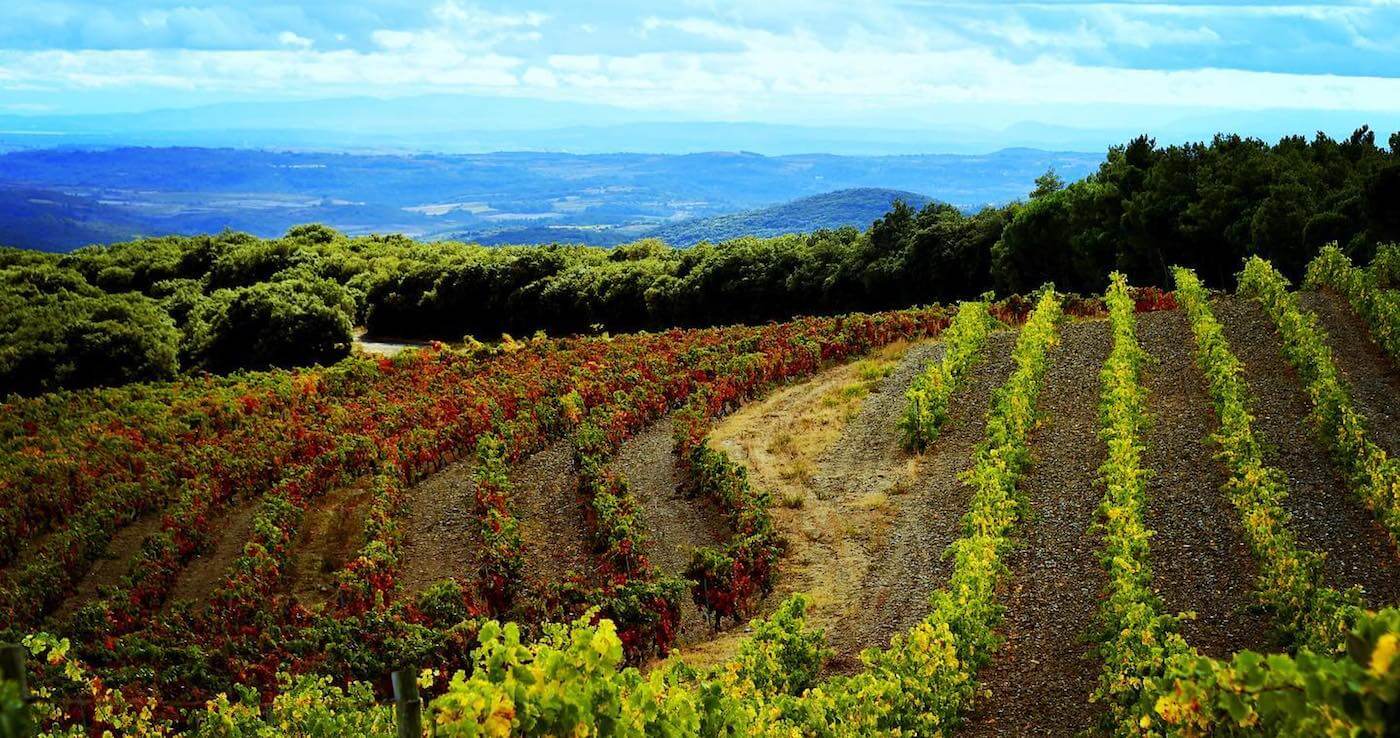
Faugères is one of the only appellations in France where all vineyards are planted on schist, a fractured, metamorphic rock that forces vines to grow deep in search of water. These soils are poor in nutrients but excellent at retaining heat, which aids ripening, and at draining excess rain. The vineyards lie between 150 and 400 metres in elevation, often on steep, terraced slopes. The combination of elevation, rocky soils, and Mediterranean climate, with warm days, cool nights, and frequent winds, creates ideal conditions for producing balanced, aromatic wines with freshness and structure.
Red wines dominate production and are typically blends based on Syrah, Grenache, and Mourvèdre, with Carignanand Cinsault also permitted. Syrah is particularly well suited to the schist terroir, bringing structure and aromatic lift, while Grenache provides warmth and flesh. Mourvèdre contributes depth and ageing potential, and Carignan, especially from old vines, adds freshness and a rustic edge. White Faugères, though a small part of total production, is made from Roussanne, Marsanne, Vermentino, Grenache Blanc, and Clairette, often yielding textured, herbal wines with a mineral streak.
The appellation remains under the radar internationally, but there is growing interest in exploring individual parcels and old vine Carignan, especially when the wines move away from heavily oaked, high-alcohol blends toward more restrained and site-expressive wines. Organic and biodynamic farming is widespread, and many producers are experimenting with amphora, concrete, and minimal sulphur additions to preserve the energy of the fruit. White wine production, though still limited, is on the rise, with producers exploring more nuanced expressions of Vermentino and Roussanne.