Sub-region
Montefalco Sagrantino DOCG is a full bodied red wine produced entirely from the Sagrantino grape that originates from the town of Montefalco in Umbria. Sagrantino has achieved cult status amongst lovers of Italian wines over recent decades, for despite its challenging nature, when managed correctly in the vineyard and cellar it is capable of producing world class wines. For now it remains slightly off the beaten track, but there are some real gems to be found here.
7
41
Tucked away in the heart of Umbria is Montefalco, the quintessential Italian wine producing town. Steeped in history and staunchly resistant to conforming to the global wine palate, Montefalco gives its name to the DOCG wine, Montefalco Sagrantino. In fact the grape’s boisterous tendencies in adolescence have no doubt contributed to the legal requirement of ageing Montefalco Sangrantino for at least three years, twelve months of which must be in oak. Softening and smoothing out these rough edges is the key to making great Sagrantino. Developing and maturing the grape’s naturally aggressive nature into elegance and grace, balance and harmony is often an exercise in both patience and understanding the potential of this mysterious and frustrating grape. Frustration and lack of patience nearly got the better of Sagrantino growers in the 1960s when the grape verged on extinction. But for the courage of a few brave and perhaps even crazy wine makers, Sagrantino would have long sine disappeared. Following their success though in taming this wild character, it was awarded DOC status in 1979 before being promoted to DOCG in 1992. When at its best it is a wonderfully structured wine obtained exclusively from Sagrantino grapes. Rich flavours merge with firm yet ripe tannins to create a wine of extraordinary ageing potential. Azienda Agraria Perticaia’s 2006 Sagrantino di Montefalco is an intense dramatic wine offering aromas of cinnamon and black cherry, followed by a powerful, structured palate of world class complexity and balance. Another of the area's best, Paolo Bea’s Sagrantino has a dark purple hue with a full, powerful nose of raisined berries and smoke. The palate unfolds an array of blackberries, currants, cinnamon and clove, is mouth-filling, warm and dense. This particular wine actually spends twenty-four months in oak and a year steal, an extra twelve months more than the required ageing.
Rumoured to have been brought here from the middle east by Saint Francis, or perhaps even ancient Greek in origin, the Sagrantino grape is similar in a way to it’s Tuscan neighbour Sangiovese, yet shows a considerably wilder edge in youth.
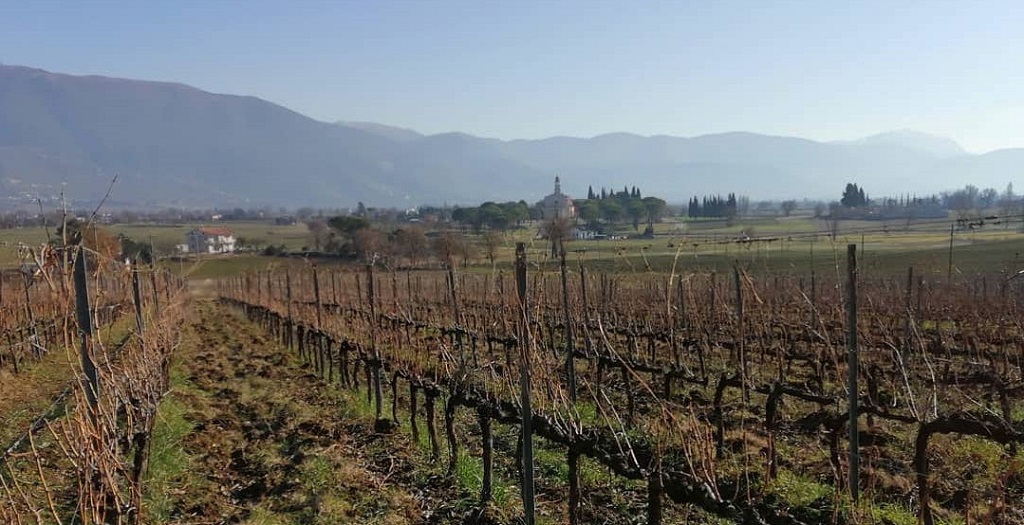
The vineyards of this fascinating appellation are centred around the town of Montefalco but do extend as far as Bevagna. Surrounded by the Apennine mountains, the soils here are mostly clay with limestone and sand. The hot summers and cold winters are not too dangerous as the clay soils keep the roots cool as they search for water deep in the ground. A drying wind called the Tramontano comes from the north and reduces the risk of rot while at night mountain breezes cool the grapes. The growing season, like much of Italy, is lengthened by the Mediterranean and here results in sweet dark fruit but plenty of tannin.
In the last few years the Consorzio of Montefalco has done a wonderful job of promoting the area's wines. The Montefalco Antemprima takes place each year and provides a window into the new vintage. A lot of that marketing work was initiated by Giampaolo Tabarrini, and is now continued by the current president Paolo Bartoloni, of Le Climate.
%%card_70.subscriber%% %%card_117.subscriber%%