Region
Umbria is a central Italian region famed for its Sagrantino, but increasingly adept at producing high quality wines from a number of local varieties.
18
78
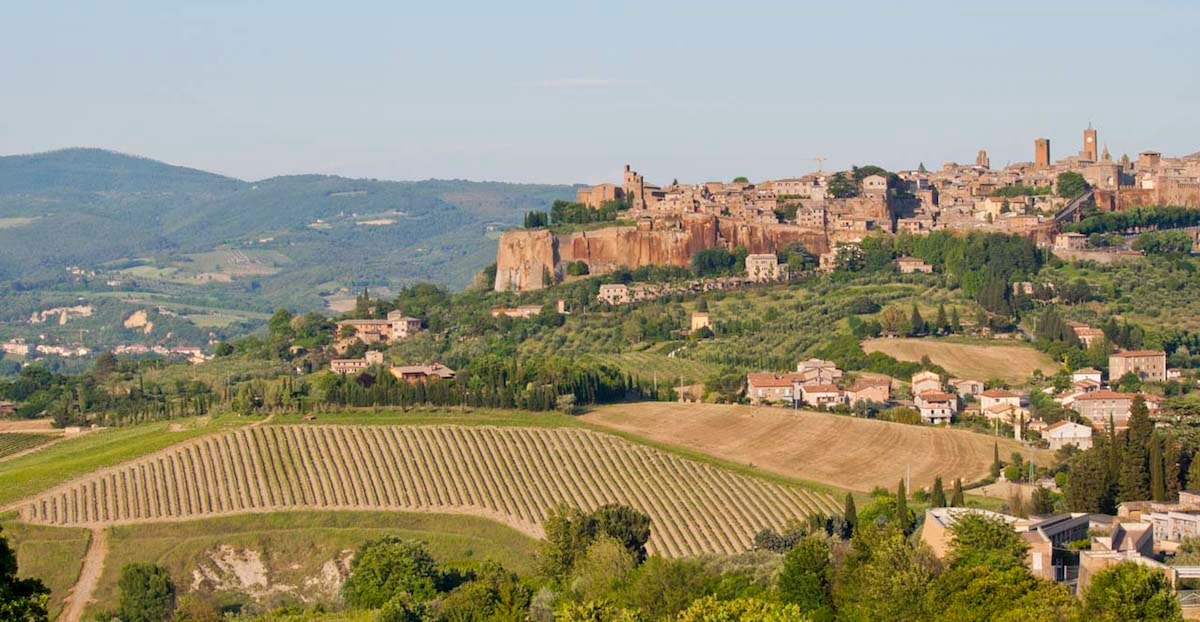
Umbria, often referred to as “the green heart of Italy,” is the only landlocked region in central Italy, bordered by Tuscany to the west, Marche to the east, and Lazio to the south. It is a region of rolling hills, medieval hilltop towns, deep valleys, and silvery olive groves, with a quietly spiritual and timeless atmosphere. The Apennine Mountains form a rugged eastern spine, while the Tiber River cuts through the landscape, nourishing the fertile plains. Unlike its more tourist-trafficked neighbors, Umbria exudes a rustic serenity and agricultural authenticity, with towns like Assisi, Orvieto, Montefalco, and Todi preserving centuries of monastic, artistic, and rural traditions.
Culturally and gastronomically, Umbria is deeply tied to the land. It is known for truffles, lentils from Castelluccio, porchetta, wild boar, and pecorino, all matched naturally by robust, earthy wines. Though it lacks the global wine fame of Tuscany, Umbria produces wines of character, structure, and increasing finesse—often at a more accessible price point. Its winemaking identity has long been shaped by ancient tradition and religious influence, but in recent decades, a growing number of quality-focused producers have brought renewed attention to its indigenous grapes, complex terroir, and potential for long-lived, terroir-expressive wines.
Winemaking in Umbria dates back to the Etruscan era, long before Roman conquest, when vine cultivation was already deeply embedded in the region’s culture. The Etruscans not only made wine but also traded it extensively across the Mediterranean, and archaeological finds near Orvieto and Todi attest to early cellar systems carved into tufa rock. During the Roman period, Umbrian wines gained further prestige, appreciated for both their quality and their role in religious and civic rituals. In the Middle Ages, monasteries played a critical role in preserving viticultural knowledge, while the hilltop town of Orvieto became particularly famous for its golden, sweet wines—favored by popes and artists and often consumed as a sacramental or celebratory drink.
Modern Umbrian winemaking began to reassert itself in the mid-20th century, after decades of marginal production focused on bulk wines and local consumption. The turning point came in the 1960s and ’70s with the efforts of pioneering producers like Giorgio Lungarotti in Torgiano, who helped elevate quality standards and lobbied for legal recognition—leading to Torgiano Rosso Riserva becoming Umbria’s first DOCG in 1990. The 1990s and early 2000s saw further revitalisation, especially with Montefalco Sagrantino, a once-obscure native grape that producers like Arnaldo Caprai transformed into one of Italy’s most intense and structured red wines. Today, Umbria balances tradition with innovation, with renewed interest in indigenous varieties like Trebbiano Spoletino, Grechetto, and Sagrantino, and a growing emphasis on organic farming, terroir expression, and site-specific winemaking.
Umbria’s terroir is defined by its diverse topography, calcareous soils, and a relatively dry continental climate, all of which contribute to the structure and balance of its wines. Much of the region is hilly, with elevations ranging from river valleys to upland ridges, providing excellent exposure and ventilation for vineyards. In the west, the Orvieto DOC lies on ancient volcanic plateaus rich in tufa and clay, soils that lend minerality and freshness to its white wines, particularly those based on Grechetto and Trebbiano Toscano. The Classico zone near the town of Orvieto is especially prized for its fossil-rich subsoils, which contribute to textural depth and aromatic precision.
In central and southern Umbria, terroir shifts toward marl, sandstone, and limestone-rich clay, especially in the Montefalco and Torgiano zones, where red wines dominate. Montefalco Sagrantino DOCG, with its high-elevation vineyards and stony soils, produces deeply tannic and age-worthy wines from the native Sagrantino grape, shaped by wide diurnal shifts and low rainfall. Torgiano Rosso Riserva DOCG benefits from a mix of alluvial deposits and calcareous clay, ideal for structured Sangiovese-based wines. Meanwhile, emerging appellations like Colli Martani and Assisi DOC show promise with diverse mesoclimates and soil types, often combining sandy loams with limestone outcrops. These varied terroirs—complex yet compact—make Umbria a patchwork of distinct microzones, each capable of producing wines that reflect their origin with clarity and depth.
Umbria’s wine identity is anchored in a mix of native and traditional grape varieties, with red wines often centered around Sangiovese and Sagrantino, while whites are shaped by Grechetto, Trebbiano Toscano, and increasingly, Trebbiano Spoletino. Sangiovese, the most widely planted red grape in Umbria, forms the backbone of blends in appellations like Torgiano Rosso Riserva DOCG, Montefalco DOC, and Colli Perugini DOC, offering structure, acidity, and savory depth. Sagrantino, indigenous to the Montefalco area, stands apart for its intense tannins, dark fruit, and longevity, and is the sole permitted grape in Montefalco Sagrantino DOCG, where it yields some of Italy’s most powerful reds. Supporting varieties such as Merlot, Cabernet Sauvignon, and Colorino are also used in blends across the region, particularly in newer IGT wines aimed at international markets.
On the white side, Grechetto is Umbria’s signature variety, particularly in Orvieto DOC, Torgiano DOC, and Colli Martani DOC, where it brings body, orchard fruit, and herbal notes. It is often blended with Trebbiano Toscano (locally called Procanico), which adds lightness and acidity. A resurgence of interest in Trebbiano Spoletino, once nearly forgotten, has led to varietal wines of real character—marked by high acidity, floral lift, and aging potential—especially in the Spoleto DOC and Montefalco DOC zones. Malvasia, Verdello, Drupeggio, and international whites like Chardonnay also appear in small quantities, typically in blends.
Umbria is home to a compact yet expressive range of DOC and DOCG appellations that reflect its varied terrain and ancient viticultural traditions. The most renowned among them is Torgiano Rosso Riserva DOCG, awarded in 1990 and centered around the town of Torgiano near Perugia. This designation mandates a minimum of 70% Sangiovese, resulting in structured, age-worthy reds with earthy depth and firm tannins. Just to the south lies Montefalco Sagrantino DOCG, one of Italy’s most powerful red wine appellations, known for its robust, tannic wines made from 100% Sagrantino, a native grape with deep historical roots. The broader Montefalco DOC encompasses more approachable red blends based on Sangiovese and includes a white counterpart made primarily from Grechetto.
In addition to these two DOCGs, Umbria features several DOCs with distinctive identities. Orvieto DOC, straddling Umbria and Lazio, is the region’s most widely recognized white wine appellation, historically prized for sweet wines but now primarily producing crisp, mineral-driven dry whites based on Grechetto and Trebbiano Toscano. Torgiano DOCcovers a wider range of wines than its DOCG sibling, including fresh whites and everyday reds. Colli Martani DOC, Colli del Trasimeno DOC, and Assisi DOC reflect local terroir variation and often highlight Grechetto, Trebbiano Spoletino, or blends involving Sangiovese and international varieties. While small in number, Umbria’s appellations reveal a diversity of styles—from bold, age-worthy reds to subtle, volcanic whites—all shaped by the region’s rolling hills, calcareous soils, and relatively dry continental climate.
In recent decades, Umbria has experienced a quiet but determined transformation, moving from bulk-oriented production to a more quality-driven, terroir-focused approach. Many appellations, particularly Montefalco Sagrantino DOCGand Orvieto DOC, have undergone a reevaluation of their viticultural practices, with increasing emphasis on lower yields, organic and biodynamic farming, and indigenous grape revival. Sagrantino, once produced primarily as a sweet wine, is now being vinified dry with more finesse, better tannin management, and aging in large, less intrusive oak. In white wine zones like Orvieto, producers are moving away from bland, neutral wines toward more textural, lees-aged styles that highlight Grechetto’s depth and minerality. Across the region, Trebbiano Spoletino has become a rising star, admired for its structure and ability to express site-specific character, often fermented in amphora or aged on lees to add complexity.
On the global stage, Umbria remains somewhat under-the-radar compared to Tuscany, but that’s shifting slowly. Export markets are taking increasing notice of Montefalco Sagrantino’s uniqueness, especially in the U.S. and northern Europe, where wine professionals are drawn to its distinctiveness and age-worthiness. Boutique estates are finding traction with small-lot, artisanal wines, often under the broader Umbria IGT label, which allows greater stylistic freedom. There’s also growing interest in enotourism, fueled by Umbria’s cultural and culinary appeal, which has encouraged more producers to invest in direct-to-consumer sales and tasting room experiences. As climate change affects other regions more severely, Umbria’s balanced climate and elevation diversity may position it as a resilient source of high-quality wines, blending historical depth with modern dynamism.
Moretti Omero · 2019